
If you sell property in Michigan through a land contract, you’re giving the buyer the right to live on and use the property while making payments directly to you. The buyer doesn’t immediately receive the legal title. Instead, the legal title is transferred only after the full balance of the land contract has been paid.
- The Path of Forfeiture: A Faster Route to Possession
- The Path of Foreclosure: Recovering the Property and Unpaid Debt
- Forfeiture or Foreclosure? How to Choose the Right Strategy
- Don’t Act Without Counsel: Making a Final, Informed Decision
While the arrangement can be beneficial for both parties, problems arise when the buyer stops making monthly payments or fails to pay property taxes and insurance. When these defaults happen, Michigan law gives you, as the seller, two primary legal remedies to reclaim your property: forfeiture and foreclosure.
Let our competent real estate attorney in Muskegon explain how forfeiture vs. foreclosure works in Michigan.
The Path of Forfeiture: A Faster Route to Possession
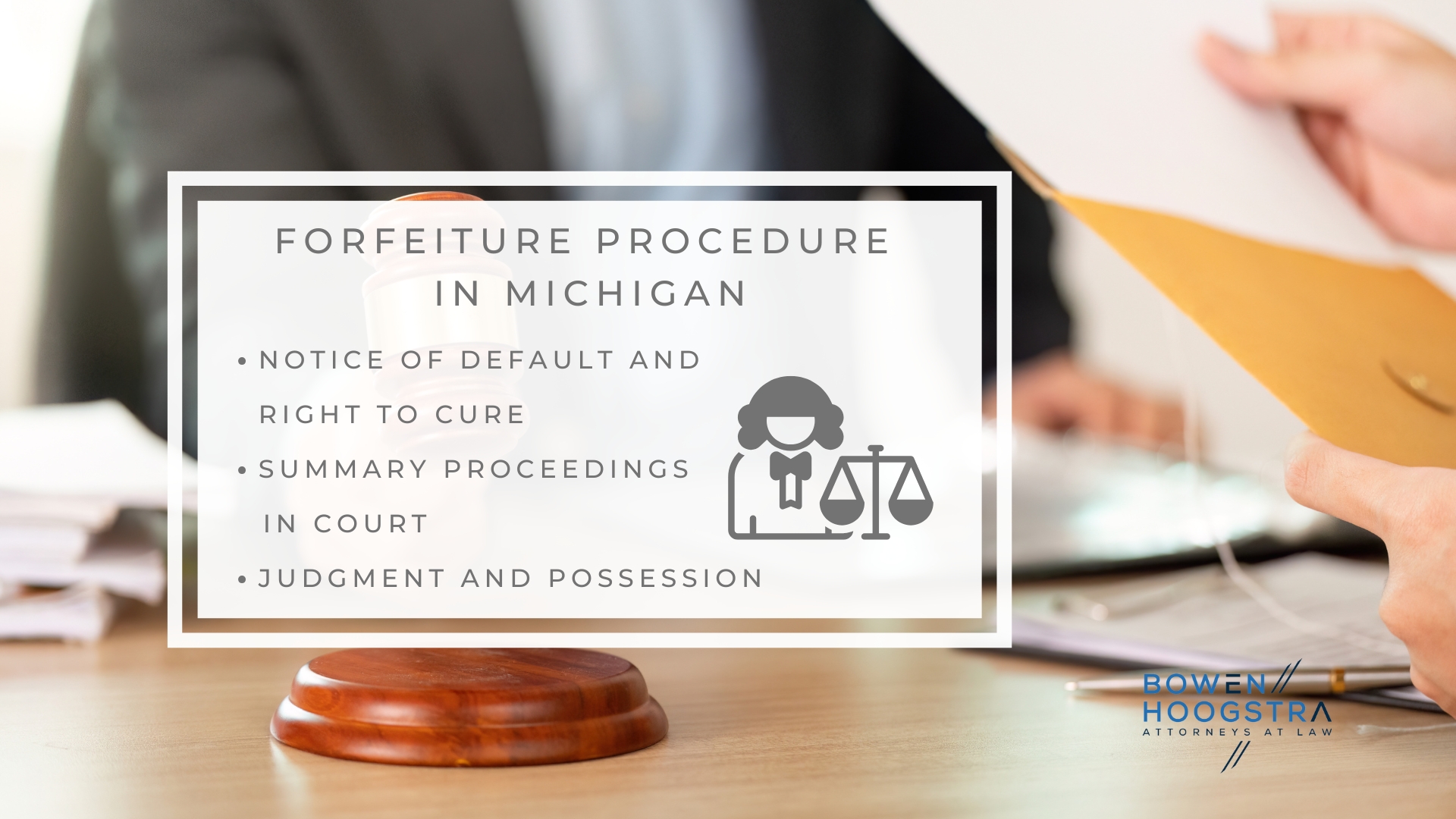
Most Michigan land contracts include a forfeiture clause, giving the seller the right to take the property back if the buyer defaults. Forfeiture is designed to be relatively quick and affordable, making it especially appealing for landlords and property sellers who want to regain possession without dragging the matter through lengthy litigation. Here’s how the process works:
- Notice of Default and Right to Cure
The process begins with you, the seller, serving a written notice of forfeiture to the buyer. Michigan law requires you to provide the buyer a 15-day window to correct the default, also known as the cure period. During the said period, the buyer can make up the missed payments or address the issue to avoid forfeiture.
- Summary Proceedings in Court
If the buyer fails to cure the default within the notice period, you can file a summary proceeding in the district court. It’s similar to an eviction case and intended to move quickly through the court system. Unlike foreclosure, which can take months or even years, forfeiture can often be completed within a matter of weeks.
- Judgment and Possession
Once the court grants a judgment of forfeiture, the buyer is typically given a 90-day redemption period, or 6 months if the buyer has paid 50% or more of the purchase price. If the buyer doesn’t pay what’s owed within the redemption period, the court issues an order allowing you to reclaim possession of the property.
Compared to foreclosure, forfeiture is much faster, often allowing you to regain possession of the property within a matter of weeks from the initial notice. However, there’s one significant drawback—you can’t pursue a deficiency judgment. That means if the property sells for less than the remaining balance of the land contract, you cannot go after the buyer for the difference.
The Path of Foreclosure: Recovering the Property and Unpaid Debt
While forfeiture is the faster route, foreclosure might be the better option if your priority is recovering the money you’re still owed. Foreclosure is a formal legal process that ends with the property being sold, usually at a public auction, and can result in a deficiency judgment if the sale price doesn’t cover the full amount of the land contract balance. In Michigan, foreclosure of a land contract can happen in two ways:
- Judicial Foreclosure
Judicial foreclosure goes through the court system. As the seller, you file a civil lawsuit asking the court to terminate the rights of the buyer and authorize the sale of the property to satisfy the unpaid debt. Because the court oversees every step, judicial foreclosure takes several months or longer to resolve, but offers more legal protections for both sides.
- Foreclosure by Advertisement
Foreclosure by advertisement is a non-judicial option where the property is sold at a Sheriff’s sale after notice is published in a local newspaper. While the process might be quicker and less expensive than judicial foreclosure, it’s still more time-consuming than forfeiture and requires careful compliance with legal requirements to avoid challenges.
The biggest advantage of foreclosure is that you’re not limited to just getting your property back—you can go after the unpaid debt. For example, if the land contract balance is $120,000 but the property now only sells for $90,000, you can potentially obtain a deficiency judgment for the remaining $30,000, something forfeiture does not allow.
The trade-off? Foreclosure often requires months, sometimes years, of court proceedings, legal filings, and sale processes. For landlords and sellers eager to regain possession and move forward, the delay can be frustrating. In addition, the legal expenses can add up quickly, especially if the buyer contests the foreclosure.
Forfeiture or Foreclosure? How to Choose the Right Strategy
When deciding between forfeiture vs. foreclosure, the best option depends on your goals and the financial details of the property in question. Each remedy serves a purpose, and understanding when to use one over the other can save you both time and money. If you’re unsure which path to take, consulting with a local real estate attorney in Muskegon can help you assess your specific situation and choose the remedy that best protects your interests.
When Forfeiture Makes Sense
Forfeiture is generally the smarter choice when the buyer has already built up substantial equity in the property or when the balance left on the land contract is relatively small. In these situations, the cost and time of foreclosure might not be worth it, especially since your primary objective is simply to get the property back. If the buyer defaults, you can quickly reclaim the property through forfeiture, then resell or re-rent it without spending months in court.
When Foreclosure Is Necessary
On the other hand, foreclosure becomes critical when the property is “underwater,” meaning the value of the property is less than what the buyer owes you. In such cases, regaining possession alone won’t cover your losses. The ability to pursue a deficiency judgment through foreclosure could be the only way to recover the unpaid debt. If you’re facing a significant financial hit, foreclosure might be worth the added time and cost of legal representation.
Don’t Act Without Counsel: Making a Final, Informed Decision
If you’re facing a default and aren’t sure whether forfeiture or foreclosure is right for you, Bowen Hoogstra Law is here to provide the legal assistance you need to act with confidence. Our experienced real estate attorney in Muskegon can walk you through both processes, evaluate your specific situation, and guide you toward the best course of action for reclaiming your property. Contact us today at (231) 726-4484 or here to schedule a consultation.