Land contracts are a common way to buy and sell property in Michigan, especially when traditional financing is not an option. Instead of a bank loan, you agree to make payments directly to the seller over time. That setup can work well, but problems arise when payments stop or other obligations are ignored. When that happens, the seller must decide how to enforce the contract and protect their interest in the property.
- Understanding Default Under a Michigan Land Contract
- What Is Land Contract Forfeiture in Michigan?
- What Is Foreclosure of a Land Contract?
- Why You Need a Michigan Land Contract Attorney
Two legal remedies come up most often when a buyer defaults: forfeiture and foreclosure. Each option follows a different legal path, moves at a different pace, and leads to very different outcomes for both the buyer and the seller. If you choose the wrong remedy, you could face unnecessary delays or losses. Let our qualified Muskegon land contract attorney explain how default works under a Michigan land contract and why choosing between forfeiture vs. foreclosure matters.
Understanding Default Under a Michigan Land Contract
A Michigan land contract default occurs when the buyer fails to meet the obligations spelled out in the agreement. While missed monthly payments are the most common reason for default, that’s not the only one. Many land contracts require the buyer to pay property taxes, maintain insurance, and keep the property in reasonable condition. Failing to meet any of these duties can place the buyer in breach of the contract.
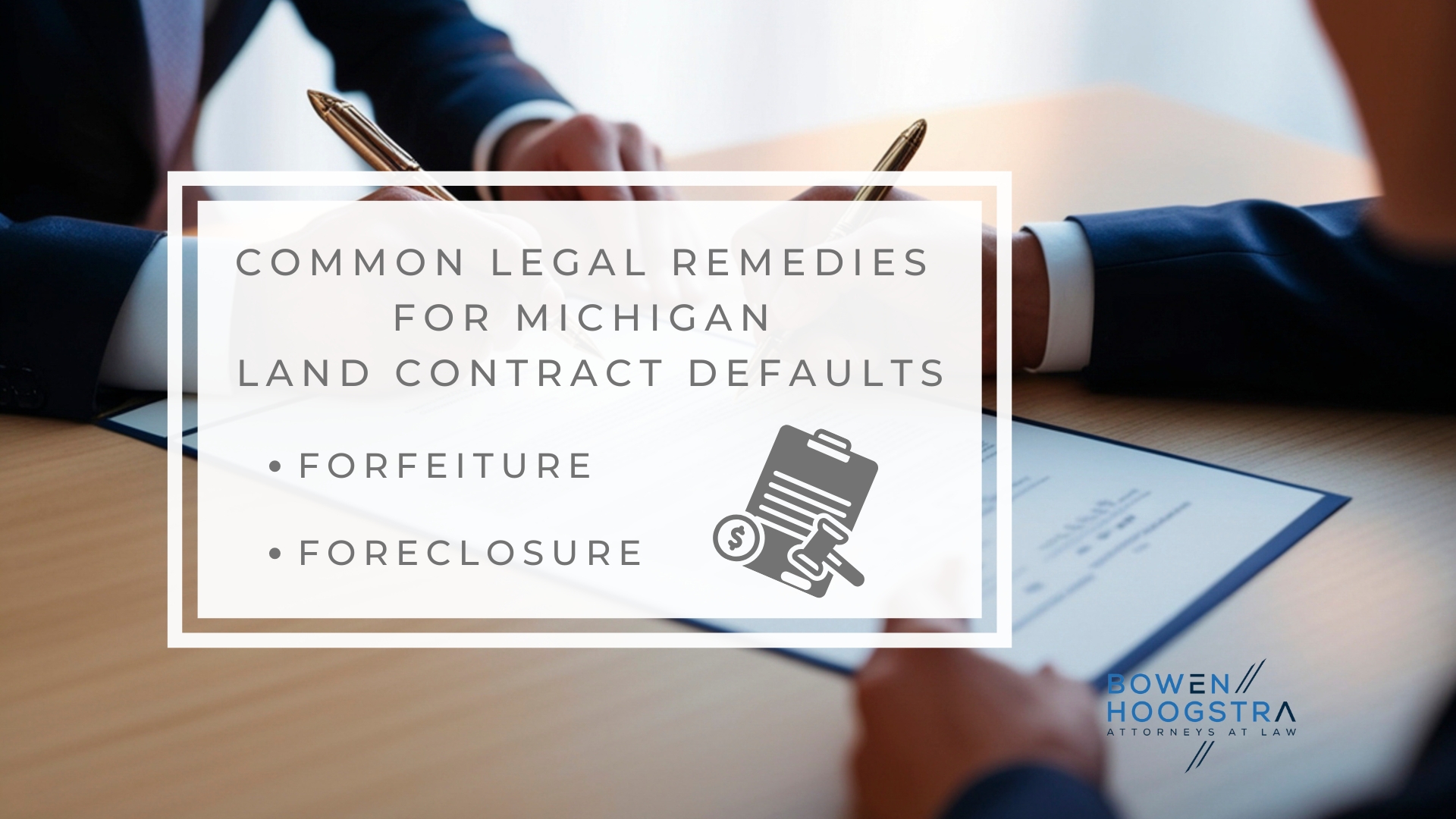
Once the buyer is in breach, the seller gains the right to enforce the contract. Michigan law generally allows two main remedies: forfeiture or foreclosure. Forfeiture focuses on terminating the rights of the buyer and regaining possession of the property. Foreclosure, on the other hand, treats the land contract similarly to a mortgage and involves selling the property to satisfy the debt. In most cases, a seller must choose one path or the other.
Choosing the correct remedy matters both legally and financially. Forfeiture is usually faster and less expensive, but it might limit the ability of the seller to recover unpaid balances. Foreclosure takes longer and costs more, but it can allow the seller to recover the full amount owed, especially if the buyer has built up equity. Consulting a local Muskegon land contract attorney early can help you understand which option fits your situation and avoid mistakes that are hard to fix later.
What Is Land Contract Forfeiture in Michigan?
Land contract forfeiture is a statutory remedy that allows the seller to terminate the rights of the buyer under the contract after a default. Instead of selling the property to pay off the balance, forfeiture seeks to end the contract and restore possession to the seller. When forfeiture is completed, the buyer loses their interest in the property, including most or all of the equity built up through prior payments.
Michigan law requires specific steps before forfeiture can move forward. The seller must serve the buyer with a written notice of forfeiture that clearly states the nature of the default and the amount needed to cure it. The notice must give the buyer 15 days, or any specified longer time, to fix the problem, often referred to as the cure period. If the buyer fails to cure the default within that period, the seller can file a forfeiture action in district court.
Forfeiture is commonly chosen because when the buyer has paid only a small portion of the total price, or when the seller needs a quicker resolution. Litigation costs are lower, procedures are simpler, and the seller avoids the delays that often come with a foreclosure sale. However, forfeiture comes with trade-offs. Once forfeiture is complete, the seller usually cannot recover the deficiency or remaining balance owed under the contract.
What Is Foreclosure of a Land Contract?
Foreclosure of a land contract is a legal process that treats the agreement similarly to a traditional mortgage. Instead of simply ending the rights of the buyer and taking the property back, foreclosure aims to satisfy the unpaid balance of the contract through a forced sale of the property. The approach is more formal, more time-consuming, and more expensive than forfeiture, but it can offer stronger financial protection for the seller in the right situation.
Michigan foreclosure of a land contract can occur through foreclosure by advertisement or judicial foreclosure. Foreclosure by advertisement follows a statutory process that allows the sale to happen without a civil lawsuit, as long as all legal requirements are met. Judicial foreclosure, on the other hand, takes place in court and involves formal pleadings, hearings, and a court-ordered sale, often required when there are disputes over the contract terms, payment history, or buyer rights.
Foreclosure is often strategically preferable when the buyer has built substantial equity in the property. Muskegon courts are generally reluctant to allow sellers to wipe out significant equity through forfeiture alone. For example, if a buyer has been making payments for many years and has paid down a large portion of the purchase price, foreclosure might be the legally safer option. It enables the buyer equity to be addressed through the sale process and reduces the risk of later legal challenges.
Why You Need a Michigan Land Contract Attorney
When a land contract goes into default, the legal choices you make next can shape the outcome for years. Michigan land contract rules are detailed, and courts expect strict compliance. One misstep can delay your case, increase costs, or expose you to legal claims. Let Bowen Hoogstra Law protect your rights and help you choose the remedy that best fits your situation.
Our seasoned Muskegon land contract attorney can review your contract, determine which remedy between forfeiture vs. foreclosure is appropriate for your case, and guide you through each step of the legal process. We’re here to reduce the risk of costly mistakes and give you a clearer path forward. Contact us today at (231) 726-4484 or here to schedule a consultation.