If you work in construction, getting paid on time matters just as much as doing the work right. Whether you are a contractor, subcontractor, or supplier, payment terms in your construction contract can affect your cash flow and financial stability. Two clauses that often cause confusion and disputes are pay-if-paid and pay-when-paid provisions. These clauses might seem similar, but in practice, both operate in very different ways.
- What Pay-If-Paid and Pay-When-Paid Clauses Mean
- How Michigan Courts Interpret Pay-If-Paid Clauses
- How Pay-When-Paid Clauses Are Treated Differently
- Legal Risks for Contractors and Subcontractors
- Why Construction Contract Review Matters in Michigan
Knowing the difference between the two can help you protect your right to payment and avoid unexpected delays or costly litigation. Courts examine these clauses carefully, and the exact language used in your contract can determine whether a provision is enforceable or not. Let our seasoned Muskegon construction attorney discuss pay-if-paid vs. pay-when-paid clauses and how Michigan courts interpret them.
What Pay-If-Paid and Pay-When-Paid Clauses Mean
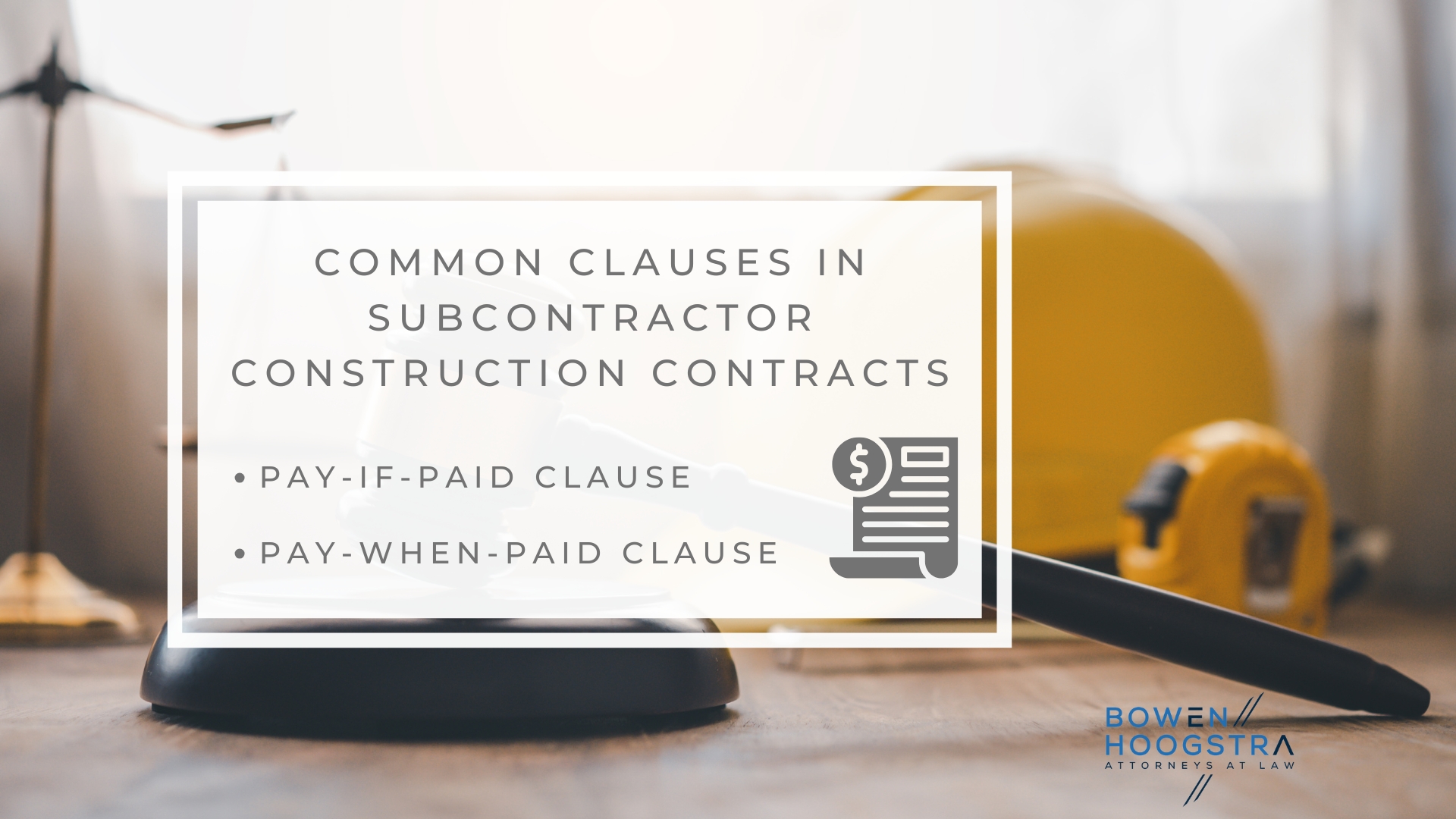
A pay-if-paid clause makes the payment of the owner to the general contractor a condition for paying the subcontractor. In simple terms, that means the subcontractor only gets paid if the general contractor gets paid first. If the owner never pays, the subcontractor might never get paid either. Such a clause shifts the risk of owner nonpayment away from the general contractor and onto the subcontractor.
A pay-when-paid clause, on the other hand, deals with timing, not entitlement. It does not eliminate the right to payment of the subcontractor. Instead, it allows the general contractor to delay payment for a reasonable period while waiting for funds from the owner. Once that reasonable time passes, the general contractor is still required to pay the subcontractor, even though the owner has not paid.
These clauses are common in subcontractor agreements because general contractors want to manage cash flow and limit exposure if an owner defaults. From the perspective of a subcontractor, however, these clauses can have serious consequences. That’s why it’s best to seek legal guidance from a local Muskegon construction attorney who can help you understand the payment terms before signing the contract.
How Michigan Courts Interpret Pay-If-Paid Clauses
Michigan courts require specific and unambiguous contract language before allowing a general contractor to avoid paying a subcontractor due to owner nonpayment. In Merkel & Co. Contractors v. Christian Co., the court made it clear that a pay-if-paid clause is only enforceable if the contract expressly states that payment by the owner is a condition precedent to the obligation of the contractor to pay the subcontractor. Vague or implied language is not enough.
Any unclear or conflicting language is usually interpreted against the party, often the general contractor, trying to enforce a pay-if-paid clause. Courts might refuse to enforce pay-if-paid clauses in situations where the language only sets a timeframe for payment, such as stating that payment will be made “after receipt of payment from the owner.” These clauses are often interpreted as a pay-when-paid clause. Payment might be delayed, but it cannot be withheld indefinitely.
How Pay-When-Paid Clauses Are Treated Differently
Unlike pay-if-paid clauses, pay-when-paid provisions are generally treated as payment timing tools, not a way to avoid payment altogether. Michigan courts view these clauses as allowing the general contractor a reasonable amount of time to receive payment from the owner before paying the subcontractor. The obligation to pay does not disappear just because the owner fails to pay. In other words, the right of the subcontractor to payment still exists, even if payment is delayed.
Problems arise when a pay-when-paid clause is used as an excuse for indefinite nonpayment. Courts have consistently rejected attempts to turn these clauses into de facto pay-if-paid provisions. A reasonable delay might account for processing, approval, or temporary cash flow issues, but it cannot be used to justify never paying for completed work. If payment is withheld beyond a reasonable period, the general contractor might be in breach of contract, regardless of whether the owner has paid.
Legal Risks for Contractors and Subcontractors
Poorly drafted payment clauses often result in construction disputes. When a contract uses vague or inconsistent language, parties might disagree over whether payment was meant to be conditional or merely delayed. These disagreements frequently escalate into litigation, especially when large sums are involved. Contractors who assume a clause shifts risk might find themselves legally obligated to pay anyway, while subcontractors might discover to have unknowingly accepted financial exposure that was never intended.
For subcontractors, nonpayment can trigger serious consequences, including cash flow strain and project shutdowns. When payment is unlawfully withheld, subcontractors might pursue breach of contract claims or enforce their rights through construction liens. For contractors, wrongful reliance on an unenforceable clause can expose them to liability, interest, and legal costs. A qualified Muskegon construction attorney can help you evaluate payment clauses before disputes arise and ensure your contract language aligns with Michigan law.
Why Construction Contract Review Matters in Michigan
Construction contracts define when you get paid, how disputes are resolved, and who carries financial risk when something goes wrong. In Michigan, pay-if-paid and pay-when-paid clauses can dramatically affect your cash flow and legal rights, especially if the language is unclear or overly aggressive. Without a careful review, you might accept terms that delay payment indefinitely or shift risks that Michigan law does not require you to bear.
Bowen Hoogstra Law is here to help you understand what your contract really says, not just what it appears to say. Our competent Muskegon construction attorneys can review payment clauses, identify hidden risks, and protect your right to be paid for the work you perform. Reach out to us today at (231) 726-4484 or here to schedule a consultation and get the legal guidance you need before signing your next Michigan construction contract.