
When you’re involved in a construction project, you expect a certain level of quality and reliability. But what if something goes wrong and there’s no specific language in the contract to address it? In Michigan construction law, certain legal obligations are built into construction contracts even if not written down or explicitly stated. These implied warranties exist to protect both property owners and contractors, setting baseline standards for workmanship and materials.
- What Are Implied Warranties in Construction Law?
- Implied Warranties Recognized in Michigan
- How to Protect Yourself in Michigan Construction Contracts
- Why You Need a Michigan Construction Lawyer
Let our local Muskegon construction attorney explain how Michigan implied warranties work to help you understand your rights when legal issues arise in construction projects.
What Are Implied Warranties in Construction Law?
Implied warranties are legal guarantees that exist by operation of law, even if not explicitly stated in a contract. Unlike express warranties, which are clearly written or spoken promises about the quality or condition of goods or work, implied warranties arise automatically based on the nature of the transaction and the expectations of fair dealing.
In construction, these warranties ensure that the work performed or the materials used meet a basic standard of quality and suitability for their intended purpose. It establishes a baseline contractors are expected to meet, even without a detailed written guarantee. For property owners, that means protection from hidden construction defects or poor workmanship.
Suppose you buy a newly built home and something goes seriously wrong due to poor workmanship or substandard materials. An implied warranty allows you to hold the builder accountable, even if the contract didn’t include any specific promises. Implied warranties help prevent unfair results when one party doesn’t live up to the basic expectations of their role.
Implied Warranties Recognized in Michigan
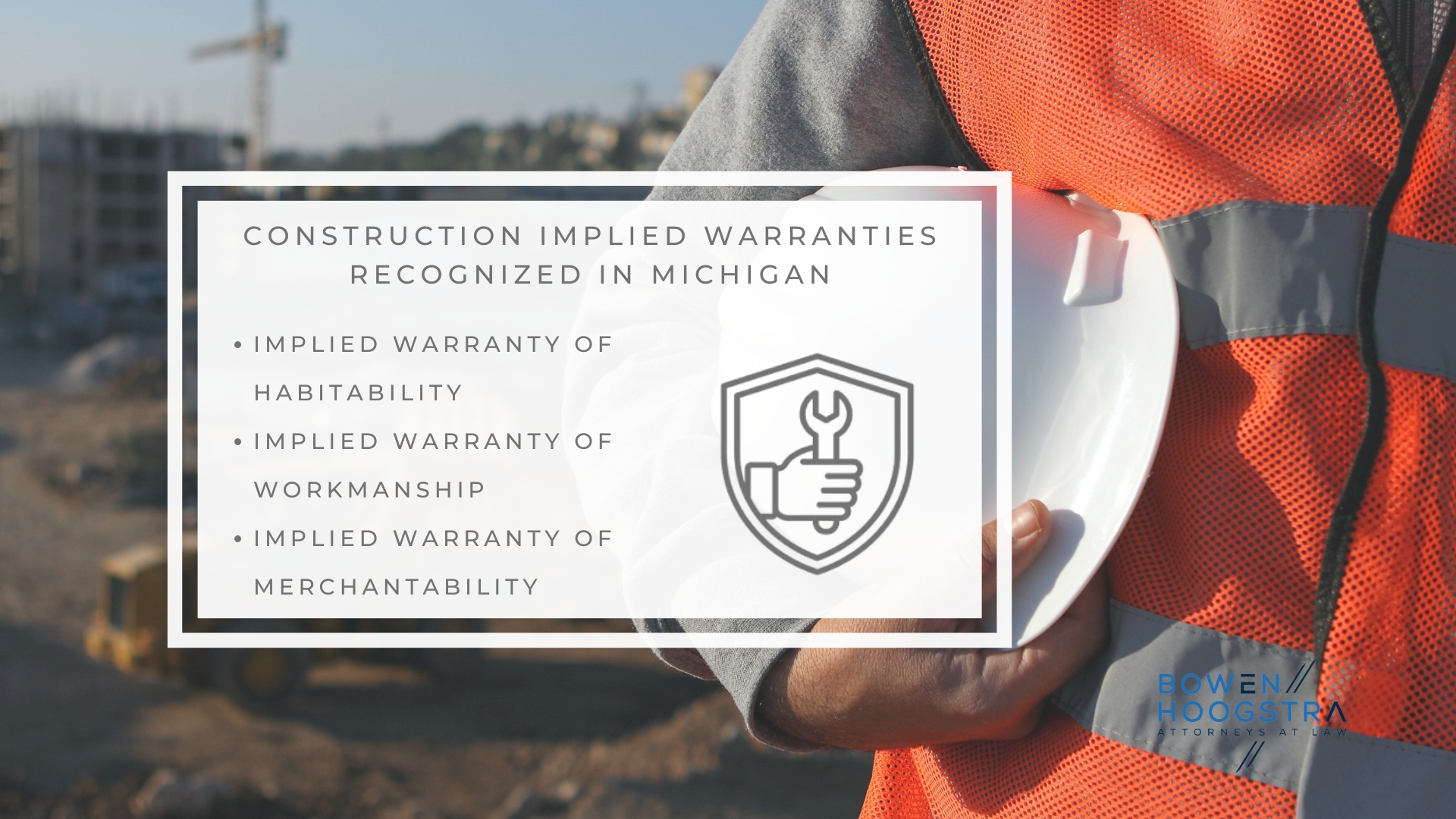
Michigan law recognizes several types of implied warranties that apply in construction and real estate transactions. These include:
Implied Warranty of Habitability
The implied warranty of habitability applies when someone buys a newly constructed home, condominium, or similar property directly from a builder-vendor. The warranty ensures the home is safe, livable, and suitable for its intended residential use. If you buy a new home and later discover structural issues that make it unfit for living, the warranty can be your legal safeguard.
However, Muskegon courts have made it clear that the warranty does not apply when a purchaser hires a contractor to build a home on land the purchaser already owns. In those situations, the relationship is considered more of a contract for services rather than a sale of a finished product, and the implied warranty of habitability is not automatically extended.
Implied Warranty of Workmanship
The implied warranty of workmanship requires that contractors perform their work in a reasonably skillful and workmanlike manner. Essentially, it means that the contractor must use ordinary skill and care expected of someone in the profession. The construction must meet acceptable building codes, use proper techniques, and deliver results free from major defects. For example, if a contractor installs a roof that starts leaking within months due to improper installation, not a defect in the materials, the implied warranty might apply.
Implied Warranty of Merchantability
Under the Michigan Uniform Commercial Code (UCC), any sale of goods by a merchant includes an implied warranty that the goods are of fair average quality and fit for ordinary use. In construction, the implied warranty of merchantability might apply if you’re buying materials directly from a supplier. If the construction materials don’t meet a basic level of quality or fail prematurely, the supplier can be held liable for the defective goods.
How to Protect Yourself in Michigan Construction Contracts
Even though implied warranties exist by law, you should never rely on them alone to protect your rights or limit your liability. Clear contract language is your first line of defense in any construction project. When you spell out what is covered, what is excluded, and what happens if something goes wrong, you reduce the chances of misunderstandings and construction disputes.
Contracts can include warranty clauses to clarify which obligations are express or limited, and how implied warranties might apply or be waived. Some builders, for example, use disclaimers that aim to reduce the chance of future legal claims based on implied warranties. These disclaimers are not always enforceable, but can help set expectations and minimize ambiguity.
Furthermore, it’s essential to keep a paper trail of communications, change orders, invoices, inspection reports, and any work completed. If a dispute arises later, documentation can serve as critical evidence. Even if you’re operating under an implied warranty, clear records can show that you met your obligations or raise defenses if you’re being accused of contract breach.
Why You Need a Michigan Construction Lawyer
Construction disputes involving implied warranties are rarely simple. These issues often hinge on specific facts, particularly what was promised, what was delivered, and whether the work met acceptable industry standards. Without legal guidance, it’s easy to get lost in the details or miss opportunities to defend your rights.
Bowen Hoogstra Law is here to guide you through construction disputes, contract negotiations, and warranty issues. Our experienced Muskegon construction attorney can help you draft contracts, understand your legal obligations, and respond effectively when problems arise. Contact us today at (231) 726-4484 or here for a consultation.