Estate planning is meant to give peace of mind, ensuring your wishes are carried out after you’re gone. But sometimes, disputes arise when family members or beneficiaries believe someone unfairly influenced a vulnerable person to change their will, trust, or other estate documents. That’s the legal concept of undue influence, and it’s a serious allegation that can complicate probate cases, strain family relationships, and result in litigation.
- What Is Undue Influence in Michigan Probate Cases?
- Legal Standards for Proving Undue Influence in Michigan
- Evidence Commonly Used in Undue Influence Claims
- Defending Against Undue Influence Allegations
- Why You Need a Probate Lawyer in Muskegon, MI
Let our qualified probate lawyer in Muskegon, MI, further discuss what undue influence means, how it’s proven, and what defenses are available.
What Is Undue Influence in Michigan Probate Cases?
Undue influence occurs when someone manipulates, pressures, or coerces another person into making decisions that don’t truly reflect their own wishes. In the context of estate planning, it often means convincing a vulnerable person, such as an elderly parent or relative, to change their will or trust in favor of the influencer.
Let’s say, for example, an elderly parent depends on one child for daily care. Over time, that child isolates the parent from siblings and eventually persuades the parent to alter the will so that the caregiver inherits everything. On the surface, the parent appears to have acted freely, but behind the scenes, judgment was overpowered by pressure and control.
Michigan probate courts view undue influence as a form of fraud. The law recognizes that some people, due to age, illness, or dependency, are more susceptible to being manipulated. Judges look closely at whether the vulnerable person has the ability to make independent decisions, especially if a financial benefit is involved.
Legal Standards for Proving Undue Influence in Michigan
Michigan law provides that the presumption of undue influence arises when three factors are present. These include:
- The existence of a confidential or fiduciary relationship.
- The influencer had an opportunity to control or manipulate the vulnerable person.
- The influencer received a significant benefit under the estate plan.
Generally, the burden of proof lies with the party alleging undue influence. But if the presumption applies, the burden shifts to the person who benefited from the arrangement. The defender of the estate documents must then prove that the testator acted of their own free will, understood their choices, and wasn’t manipulated.
Evidence Commonly Used in Undue Influence Claims
When someone challenges a will or trust on the grounds of undue influence in Michigan, courts rely on clear, convincing evidence to determine whether a vulnerable person was manipulated into making decisions that didn’t reflect their true wishes. Here are the common types of evidence used in these cases:
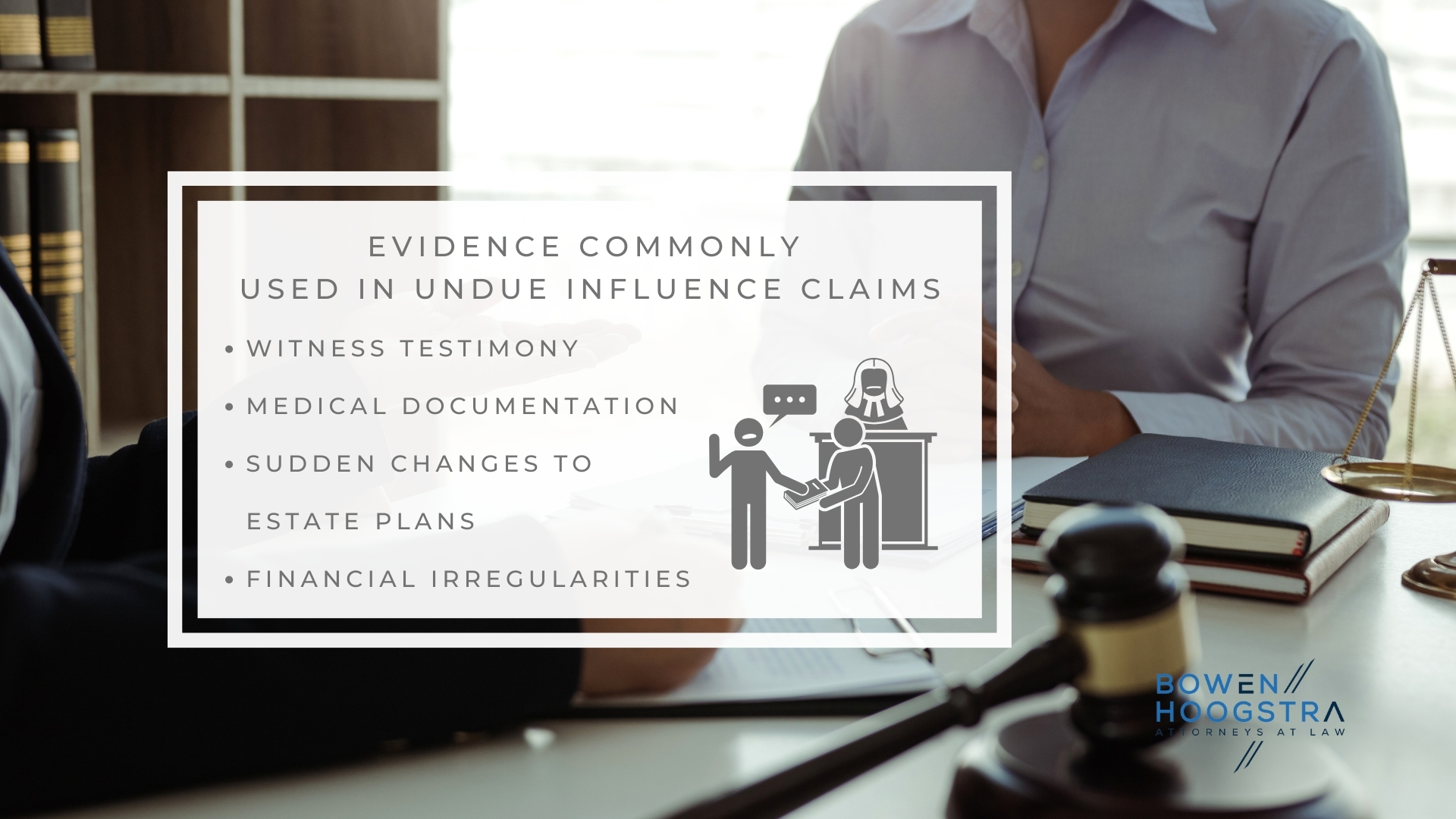
Witness Testimony
Doctors, caregivers, and family members may testify about the mental state of the individual at the time the will or trust was created or changed. Did the person seem confused or easily led? Was someone always present and speaking for them during meetings with lawyers or financial advisors? These details can paint a picture of whether pressure was involved.
Medical Documentation
If the person had been diagnosed with dementia, Alzheimer’s disease, or any other condition that affects judgment and decision-making, it could show that such a person was susceptible to influence. Notes from doctors and psychologists, especially those written close to the time the estate documents were signed, often carry significant weight in probate court.
Sudden Changes to Estate Plans
Muskegon courts pay close attention to drastic or last-minute changes in wills, trusts, or beneficiary designations. For example, if someone who always intended to divide the estate equally among children suddenly leaves everything to one individual, it raises red flags. The timing of the change, especially if it happened while the person was in poor health, adds to the suspicion.
Financial Irregularities
Patterns of suspicious financial behavior, including large transfers of money, new joint accounts, or missing funds, can serve as evidence. Courts consider whether the person was isolated or denied access to friends and family. If the influencer controlled bank access or communication, that can suggest a motive and opportunity to pressure the testator.
Defending Against Undue Influence Allegations
On the other side, you might find yourself defending against accusations that the estate plan of your loved one was the product of manipulation. Allegations of undue influence can be painful and damaging, especially if you acted out of genuine care and responsibility. Fortunately, there are strategies to protect your position and show that the estate plan was valid.
Independent Decision-Making
The strongest defense against undue influence is proving that the person made their own choices freely and with a clear mind. It often involves notes, letters, or conversations that demonstrate their intent long before the will or trust was signed. If witnesses can confirm that the testator expressed consistent wishes over time, it supports the idea that the decisions were their own.
Attorney Involvement and Documentation
Having an estate planning attorney involved in drafting and finalizing the documents provides a critical safeguard. A competent probate lawyer in Muskegon, MI, takes steps to ensure the testator understands the will or trust signed. Documentation of a local lawyer showing that the client was competent, informed, and not under pressure can be invaluable in defending against undue influence claims.
Professional Witnesses and Medical Records
Neutral, professional voices often carry the most credibility in court. Doctors, financial advisors, and lawyers who interacted with the testator can provide testimony that the testator was competent and acted voluntarily. Medical records showing mental clarity at the time of signing can help counter allegations of undue influence.
Why You Need a Probate Lawyer in Muskegon, MI
Undue influence claims are among the most complicated issues in estate planning and probate. These disputes are rarely straightforward and often emotional, highly personal, and heavily dependent on evidence. Proving or defending against a claim requires a strong legal strategy that combines witness testimony and clear documentation to show what really happened. Let Bowen Hoogstra Law guide you through the legal process.
Our seasoned probate lawyers in Muskegon, MI, understand how undue influence in Michigan is evaluated in court and can help gather the documentation, testimony, and legal records needed to build a strong case. We know what types of evidence judges consider persuasive, and more importantly, how to present that evidence effectively. Contact us today at (231) 726-4484 or here to schedule a consultation.