
In construction projects, changes are almost unavoidable. A property owner might want upgraded materials, a contractor might run into unexpected site conditions, or the parties might decide to move the schedule to keep the job moving. Many of these changes often start with a quick conversation on the job site, a phone call, or a simple “go ahead” without a clear written record. But what seems to be a small adjustment in the moment can later turn into a serious dispute over cost, delay, responsibility, or whether the change was approved at all.
- What Legally Qualifies as a Construction Change Order in Michigan
- The Statute of Frauds and Contract Modification Issues
- Payment Disputes and Mechanic’s Lien Implications
- Litigation Risks: Burden of Proof and Documentation Failures
- Protecting Your Business Before and After a Change Order Dispute
That’s why construction change order disputes are so common in Michigan. When the original construction contract says one thing but the parties act differently in practice, the disagreement often becomes a fight over proof. One side might say the work was authorized, while the other claims there was never a valid agreement, perhaps to pay more or extend the deadline, in the first place. Let our local Muskegon lawyer explain how Michigan construction change orders work and how these can turn into legal disputes when the changes are not clearly documented.
What Legally Qualifies as a Construction Change Order in Michigan
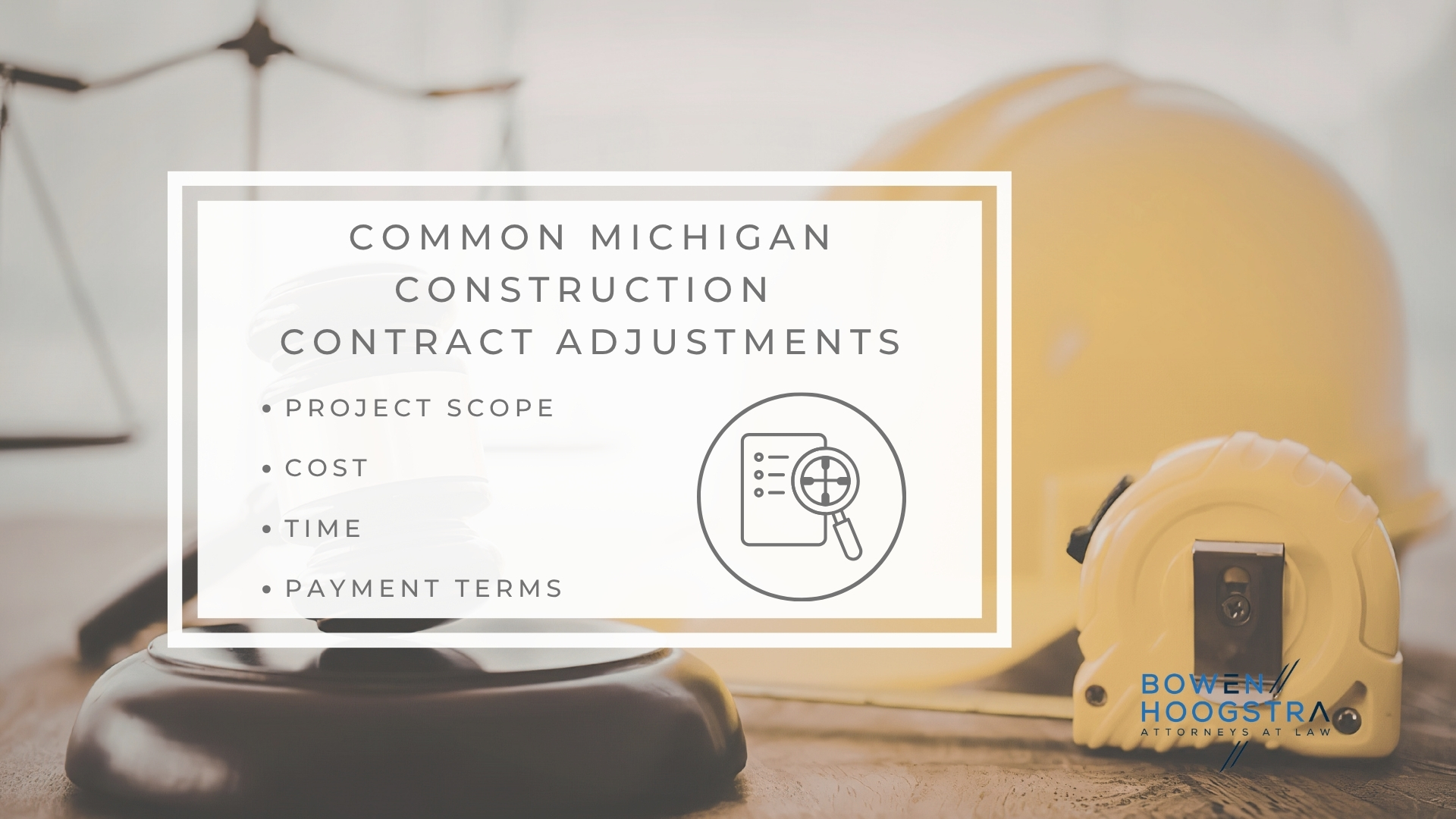
A construction change order refers to any agreed change to the original contract terms after the project begins. That can involve the work itself, the money to be paid, the time allowed to finish, or other important project arrangements. The more a change affects the obligations of the parties involved, the more important it becomes to document it clearly.
- Project Scope
A change in scope happens when the actual work is different from what the contract first required, including adding new tasks, removing part of the job, changing materials, revising design details, or requiring extra labor that was not part of the original plan. Even when everyone seems to understand the new direction, the legal problem starts when there is no clear record showing exactly what changed.
- Cost
If the owner requests additional work, upgraded finishes, or accelerated performance, the contractor might expect additional compensation. On the other hand, an owner might believe the change was minor and already covered by the original price. When the cost increase is discussed casually instead of stated clearly in writing, disputes often arise over whether the extra charge was approved at all.
- Time
Many change orders affect the project timeline. Extra work, delayed approvals, material substitutions, or site complications might justify more time to complete the project. Without a clear written extension, however, one party might later argue that the contractor was still bound by the original deadline. That can lead to claims involving delay damages, back charges, or blame for missed target date.
- Payment Terms
A valid change can involve payment timing or billing procedure. For example, the parties might agree to pay for extra work in stages, treat certain work as time-and-materials, or hold payment until another part of the project is complete. These details matter because even if the work was performed, payment disputes often turn on whether the parties truly agreed on how and when that work would be billed.
Verbal agreements create serious evidentiary problems because disputes often come down to the word of one person against another. On a busy project, people might remember the same conversation very differently. Without a written record, it becomes harder to prove whether the owner authorized the extra work or whether the parties agreed to an added cost. In these situations, it’s always best to seek guidance from a Muskegon lawyer who can help assess the facts and determine whether an enforceable construction change order exists.
The Statute of Frauds and Contract Modification Issues
Not every contract or contract change must be in writing, but some do. The Michigan statute of frauds generally requires a signed writing for certain agreements, including agreements that, by their terms, cannot be performed within one year, and contracts involving interests in real estate. In construction disputes, that matters when the original agreement or a later modification falls into a category that legally calls for a writing. So while smaller project adjustments might sometimes be proven without a formal signed change order, parties take a real risk when oral promises are relied upon for major changes tied to construction-related obligations.
Even when a contract contains an integration clause or a “no oral modification” provision, courts do not automatically treat later conduct as irrelevant. Muskegon courts focus heavily on mutual assent, and a claimed waiver or modification must be shown by clear and convincing evidence. Repeated billing practices, approved invoices, email threads, text messages, and accepted work can all be used as partial proof that the parties operated under changed terms. Still, those materials do not eliminate the risk of dispute, but simply become the evidence each side uses to argue whether a real contract modification ever happened.
Payment Disputes and Mechanic’s Lien Implications
Payment disputes often get worse when a construction change order affects when payment is due. A contractor might perform added work after verbal approval and expect payment, while the owner might argue that no extra payment is due because the change was never formally accepted. That disconnect can delay progress payments and create claims for breach of contract or nonpayment. Under the Michigan Construction Lien Act, construction lien rights are tied to the value of labor or materials furnished, but the lien generally cannot exceed the amount due under the contract, less payments already made. That means disputed extra work can still become part of a lien action if the claimant can show the added work was authorized and remains unpaid.
Litigation Risks: Burden of Proof and Documentation Failures
When a dispute reaches litigation, the party seeking payment for extra work usually has to prove that the work was actually authorized. In practical terms, that means showing there was a real agreement for the added work, whether through a signed document or other convincing evidence of mutual assent. Courts look for proof that the parties had a meeting of the minds, not just assumptions made on the job site. If a contractor claims that additional labor or materials were approved through a verbal conversation, but cannot back that up with emails, texts, invoices, field directives, or conduct clearly showing agreement, the claim becomes much harder to enforce.
Poor documentation weakens even claims that may be valid in substance. A missing signature, a vague invoice, an incomplete change log, or inconsistent billing records give the other side room to argue that the extra work was never approved. Early legal review can help prevent escalation as it allows you to evaluate the contract language, preserve key records, and address notice or payment issues before the dispute grows into a lien enforcement or full contract lawsuit. In that sense, a competent Muskegon lawyer is often most valuable before the case becomes a courtroom fight, not after the paperwork problems have already damaged your position.
Protecting Your Business Before and After a Change Order Dispute
The best way to deal with a construction change order dispute is to reduce the chance of one happening in the first place. Before you sign any construction contract, it’s best to review how the agreement handles changes to scope, price, scheduling, approvals, payment, and other construction-related terms. Taking that step early enables you to make better decisions about whether to negotiate with the other party, enforce your rights, or defend against a claim.
Bowen Hoogstra Law understands how construction disagreements can affect cash flow, project timelines, and business relationships. Our experienced Muskegon lawyers can review your contracts, identify risky provisions, and help you respond when construction change orders start creating payment or performance disputes. We’re here to protect your business at every stage of the project. Contact us today at (231) 726-4484 or here to schedule a consultation.