A commercial lease might give your business room to grow. However, it can create problems when your needs change before the lease ends. Perhaps you might decide to move to a better location, sell your business, or the monthly rent no longer fits your budget. When that happens, two common options often come up: lease assignment and subletting. Both involve another party using the leased space, but can have different legal outcomes for the tenant and landlord.
- What Lease Assignment Means in a Commercial Lease
- What Subletting Means in a Commercial Lease
- Common Disputes in Lease Transfers
- Protecting Your Business Before Transferring a Lease
In Michigan commercial lease agreements, the exact language of the lease matters. Some leases allow assignment or subletting only with the written consent of the landlord. Others place strict limits on who can take over the space and whether the original tenant remains responsible after the transfer. That’s why it helps to understand the difference between lease assignment vs. subletting before you sign an agreement or make a move that might lead to a legal dispute.
Let our local landlord & tenant lawyer in Muskegon discuss how Michigan commercial lease assignment and subletting work.
What Lease Assignment Means in a Commercial Lease
A lease assignment means the original tenant transfers its lease rights to another party. In a commercial setting, that usually happens when a business sells its assets, relocates, or no longer wants to operate in the leased space. The new party, called the assignee, steps into the position of the tenant and takes over the right to use the premises under the existing lease. In many cases, the assignee agrees to follow the same lease terms, including rent payments, maintenance duties, insurance requirements, use restrictions, and other commitments.
A Michigan tenant is presumed to have the right to assign a lease when there is no statutory or contractual restriction. However, most commercial leases do not leave that issue open and often require prior written consent from the landlord before any assignment can happen. Some leases might state that the original tenant remains liable even after assignment, unless the landlord gives a written release. So, before assuming you can walk away from the lease, examine the terms carefully to understand your rights and responsibilities as the landlord or tenant.
What Subletting Means in a Commercial Lease
Subletting works differently. In a sublease, the original tenant keeps the main lease with the landlord but rents all or part of the space to another party. The new occupant is typically referred to as the subtenant. Unlike an assignment, the tenant still owes rent and duties to the landlord, while the subtenant owes rent and duties to the original tenant under the sublease. Subletting can be useful when a business only wants to give up part of the space or needs temporary relief without fully transferring the lease. The original tenant, however, remains responsible if the subtenant damages the property or violates the sublease in a way that causes problems under the main lease.
Common Disputes in Lease Transfers
Even when a lease transfer seems simple, disputes can happen if the parties do not clearly understand their rights and duties. Here are common issues that often arise in lease assignment vs. subletting disputes:
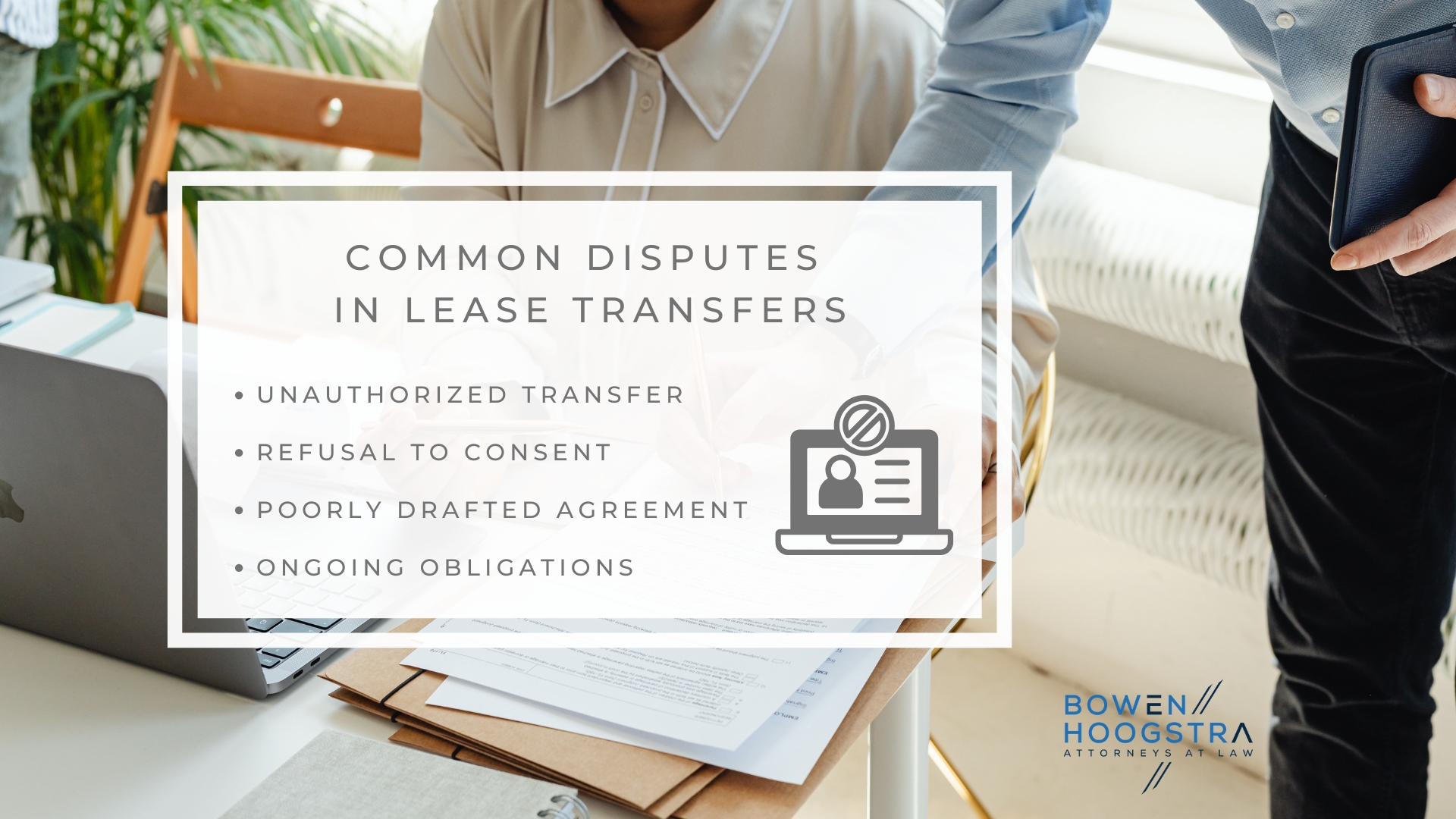
Unauthorized Transfer
Many commercial leases require written approval before any transfer takes place. If you skip that step, the landlord might argue that you breached the lease contract, even if the new occupant is paying rent and using the space responsibly. That can put your business at risk of financial penalties or a demand to remove the unauthorized occupant. Before you make any move, make sure to review the lease and confirm whether assignment, subletting, or both require approval.
Refusal to Consent
A tenant might find a responsible assignee or subtenant, only to have the landlord reject the request. The dispute often turns on the lease language. Some leases give the landlord broad discretion, while others say consent cannot be unreasonably withheld. A landlord might have valid concerns about the proposed occupant’s finances, business history, or intended use of the commercial space. On the other hand, a tenant might believe the refusal is unfair or designed to pressure the tenant to choose between a lease buyout vs. subletting the space to reduce losses.
Poorly Drafted Agreement
A lease assignment or sublease should clearly state who is responsible for rent, repairs, utilities, taxes, maintenance, and compliance with the original lease. If the document is vague, the original tenant, assignee, subtenant, and landlord can all have different contract interpretations and expectations. That’s risky, especially when the original lease has strict rules that must be carried over into the transfer agreement. A short, informal agreement might seem convenient at first, but it can leave you exposed to future liability.
Ongoing Obligations
Disputes might arise over ongoing obligations, including maintenance, rent, insurance, and property use. For example, a subtenant might fail to maintain required insurance, operate outside the permitted use, or fall behind on payments. Even if the subtenant caused the issue, the original tenant might still be responsible under the main lease. In an assignment, the assignee might take over major duties, but the original tenant might remain liable, unless the landlord agrees to release the tenant.
Protecting Your Business Before Transferring a Lease
Before you assign a commercial lease or sublease your space, take time to understand what your lease actually allows. The right option often depends on your business goals and the lease terms. What works for one tenant might not work for another. For instance, a business that wants a clean exit might look at an assignment or a lease buyout. A business that only needs temporary relief, on the other hand, might consider subletting.
Bowen Hoogstra Law can help you evaluate the difference between lease assignment vs. subletting and decide which path better protects your business. Our experienced landlord & tenant lawyer in Muskegon can review your commercial lease, draft or revise transfer documents, and help you avoid terms that leave you exposed to future liability. Contact us today at (231) 726-4484 or here to schedule a consultation.