

When someone creates a trust, that person expects the trustee to act with care, honesty, and good judgment. The trustee, who might be a family member, trusted friend, professional advisor, or financial institution, is given authority to manage property, pay expenses, make distributions, and protect the interests of the people named in the trust. Because a trustee controls assets that belong to someone else, the role comes with serious responsibilities.
- The Role and Responsibilities of a Trustee
- Situations That May Justify Trustee Removal
- Protecting Beneficiaries and Trust Assets
Problems can arise when a trustee does not follow the trust terms, delays distributions without a valid reason, fails to communicate, or mismanages trust assets or property. In some cases, beneficiaries try to resolve the issue through a written request or family discussions. But when the conduct of the trustee threatens the trust or harms the beneficiaries, court intervention might become necessary.
Trust disputes often raise important questions: How do you remove a trustee from a trust in Michigan? Can a trustee be removed without consent from the trustee or other beneficiaries? How serious does the misconduct need to be? The answer depends on whether the legal grounds for trustee removal can be proven. Let our experienced probate lawyer in Muskegon, MI, discuss when trustee conduct might justify removal.
The Role and Responsibilities of a Trustee
A trustee has fiduciary duties to the beneficiaries of the trust, meaning the trustee must act with loyalty, care, honesty, and fairness when handling trust matters. The trustee must follow the instructions in the trust document, make decisions that serve the purpose of the trust, and avoid conflicts of interest that might harm the beneficiaries. If the trust gives the trustee discretion, that discretion still has limits. The trustee cannot treat trust property as personal property, use trust assets for personal benefit, or favor one beneficiary over another unless the trust terms clearly allow it.
Furthermore, trustees are responsible for managing trust assets in a responsible and impartial manner. That might include protecting real estate, paying taxes and expenses, investing funds prudently, keeping accurate records, and communicating with beneficiaries when appropriate. A trustee who refuses to answer reasonable questions, commingles trust funds with personal funds, or cannot explain important decisions can create serious concerns. Since trustees have control over assets that are not personally theirs, Muskegon courts hold them to a high legal standard.
Situations That May Justify Trustee Removal
Not every mistake justifies removing a trustee. Courts look for conduct that seriously affects the trust, harms the beneficiaries, or prevents the trust from being administered properly. Under Michigan law, if any of the legal grounds are met, the probate court can remove a trustee, unless the trust itself contains provisions that specify conditions for removal. Here are situations where trustee removal might become a valid legal remedy:
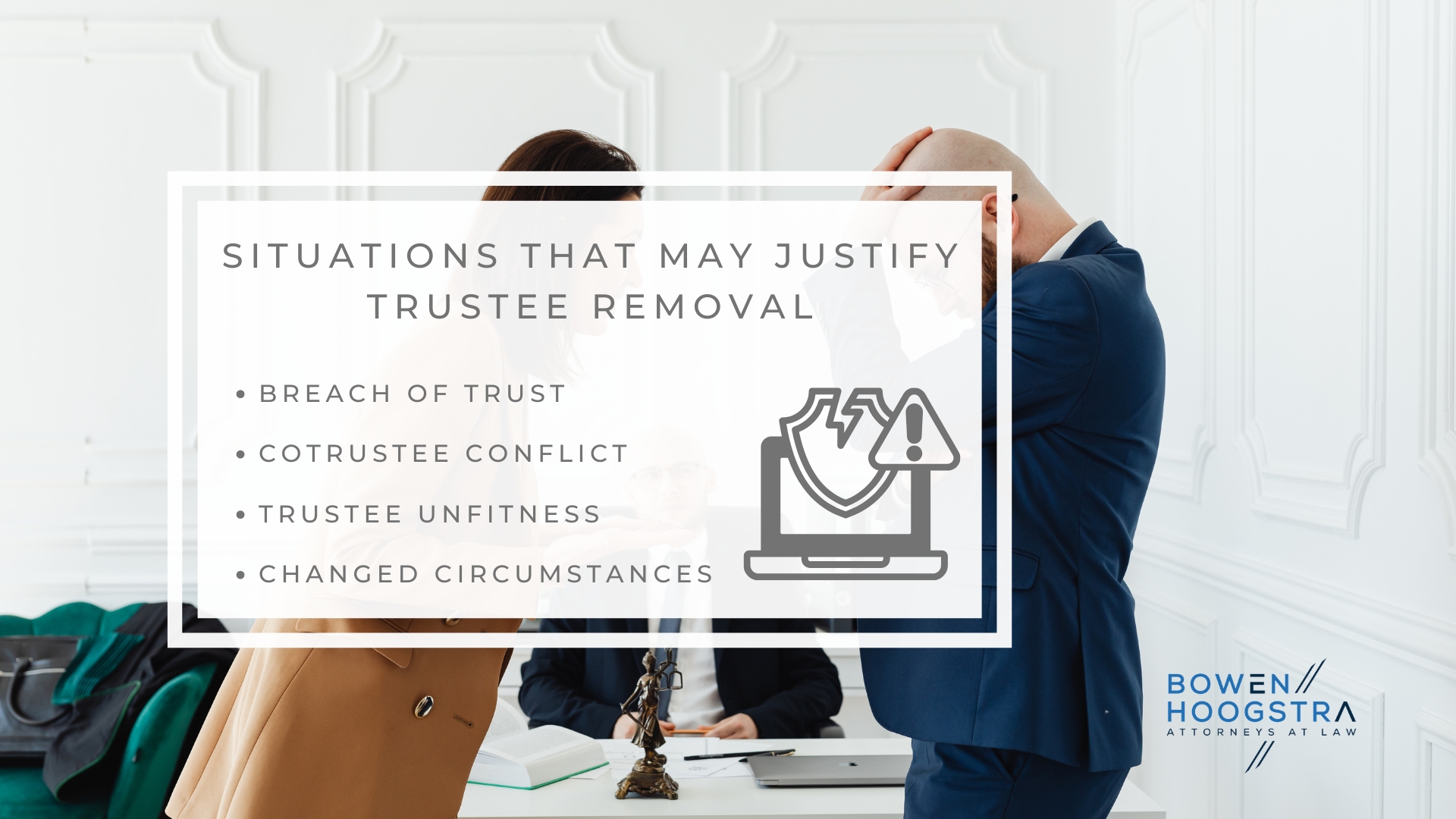
- Breach of Trust
A serious breach of trust can include using trust money for personal expenses, selling trust property for less than fair value to benefit someone close to the trustee, hiding assets, refusing to make required distributions, or ignoring clear instructions in the trust document. Note that courts do not remove trustees based on suspicion alone. Beneficiaries who suspect serious misconduct must gather records, account statements, letters, emails, and other evidence that show the trustee caused harm and can no longer be entrusted to manage the trust.
- Cotrustee Conflict
Some trusts name more than one trustee, and that can work well when cotrustees communicate, divide responsibilities, and make decisions together. But when cotrustees refuse to cooperate, the conflict can make trust administration difficult or impossible. Though disagreement alone might not justify removal, if the lack of cooperation causes unpaid expenses, poor asset management, missed deadlines, or confusion among beneficiaries, the court might decide to remove one trustee or change the structure of administration to restore order and protect the trust.
- Trustee Unfitness
A trustee can be removed when the trustee is unfit, unwilling, or persistently unable to administer the trust effectively. Unfitness can involve poor judgment, dishonesty, and other conduct that indicates the trustee cannot bear the responsibility. Unwillingness might appear when the trustee ignores duties, refuses to communicate, or shows no interest in managing the trust. Persistent failure points to an ongoing pattern of poor trust administration. If the court finds that trustee removal better serves the purposes of the trust, it might appoint a suitable replacement.
- Changed Circumstances
Sometimes the trustee has not committed misconduct, but circumstances have changed in a way that makes the current trustee arrangement no longer workable. For example, the trustee might have moved far away, developed health problems, or become involved in a conflict that did not exist when the trust was created. In these situations, the court might consider trustee removal if it serves the interests of the beneficiaries and the change does not go against a material purpose of the trust. Moreover, a suitable successor trustee or cotrustee must be available to ensure that removal does not leave the trust without proper management.
But you might ask, “Can a trustee be removed without consent?” In Michigan, the trustee does not have to agree to be removed if the court finds that a legal ground exists. That said, a court won’t remove a trustee simply because one beneficiary is unhappy or family relationships have become tense. The person requesting removal must show that continued service of the trustee creates a real problem.
Protecting Beneficiaries and Trust Assets
If you’re concerned about trustee misconduct or trust assets being mishandled, Bowen Hoogstra Law can help you understand your rights and decide what steps make sense for your situation. Our competent probate lawyer in Muskegon, MI, can review the trust, evaluate possible grounds for trustee removal, and represent you in probate court if legal action becomes necessary. Contact us today at (231) 726-4484 or here to schedule a consultation. We’re ready to protect your trust assets and work toward a practical resolution.