Buying a business is a major investment, and you expect the seller to be upfront about what you’re getting. In Michigan, however, sellers are not generally required to provide a formal disclosure when selling a business, unlike in residential real estate. Still, that doesn’t give sellers a free pass to hide the truth. If a seller fails to disclose material facts that a reasonable buyer should have known before the sale, it can amount to fraudulent misrepresentation or concealment.
- Early Warning Signs the Seller May Have Misrepresented Facts
- Gathering Proof: Key Evidence to Show the Seller Lied on Disclosure
- Causes of Action and Litigation Strategy in Michigan Courts
- Protect Your Investment With Bowen Hoogstra Law
When that happens, you might be left with a business that’s worth far less than you paid, or worse, burdened with liabilities you never agreed to take on. Fortunately, there are ways to hold a dishonest seller accountable. Let our qualified Muskegon business attorney discuss the warning signs you should look out for, how to prove that the seller lied on disclosure in a Michigan business sale, and the evidence you need to build your case.
Early Warning Signs the Seller May Have Misrepresented Facts
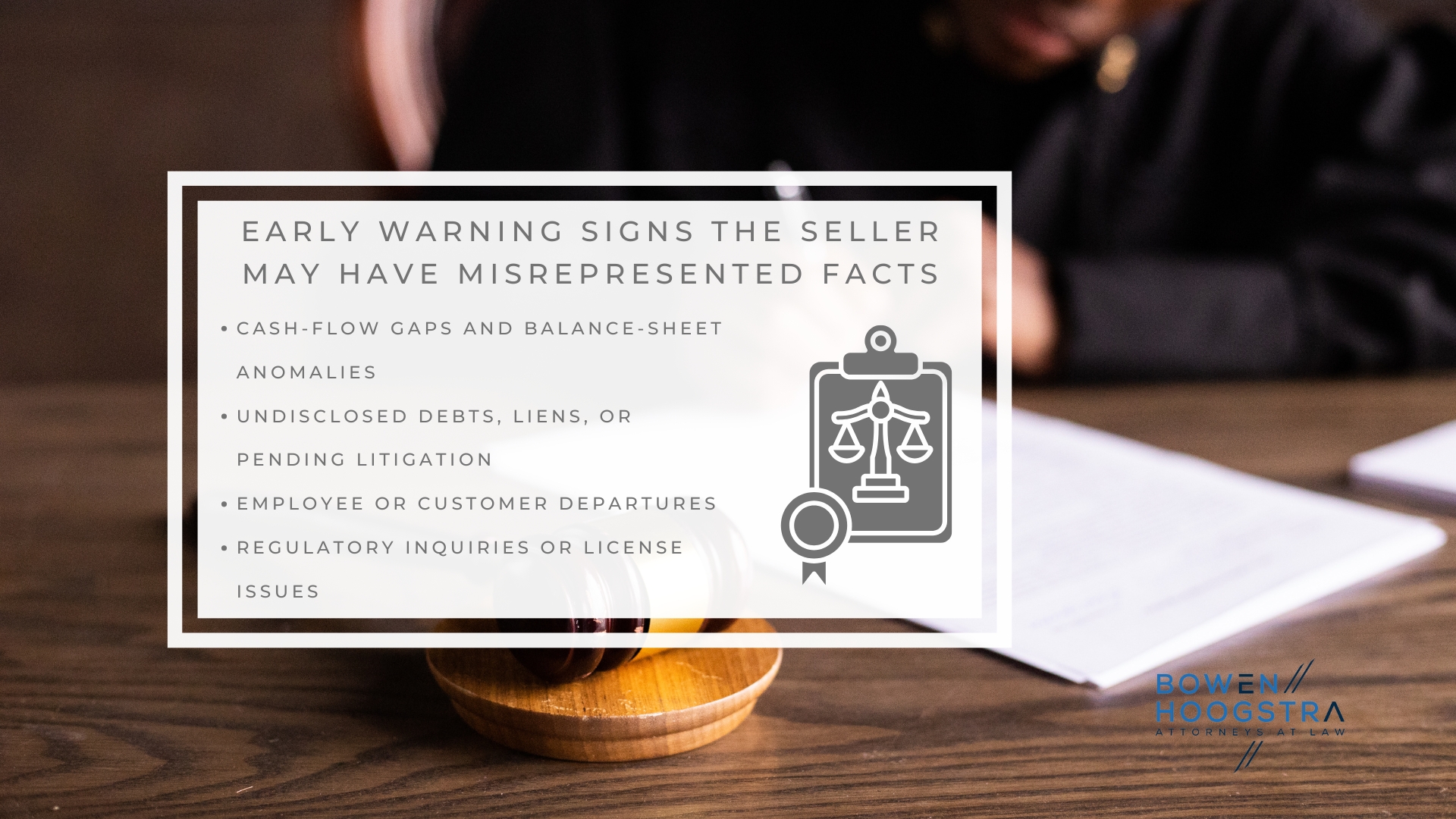
Even the best due diligence can’t catch everything. Sometimes the warning signs only appear after you take over operations. Here are a few common indicators that suggest the seller might have misrepresented or concealed material facts:
Cash-Flow Gaps and Balance-Sheet Anomalies
If revenue or profits suddenly dip without any clear reason, or the books don’t match what you were shown during the sale, that’s a major red flag. Unexplained shortfalls in cash flow or discrepancies in assets and liabilities signal that financial records were manipulated to make the business look healthier than it really was.
Undisclosed Debts, Liens, or Pending Litigation
Finding out about unpaid loans, liens on company property, or pending litigation after closing is a clear indication of misrepresentation. If these financial and legal obligations weren’t disclosed and couldn’t have been discovered through routine public records, you might be dealing with a fraudulent omission.
Employee or Customer Departures
If key employees resign or long-term customers stop doing business right after the sale, that could point to serious problems the seller failed to mention, such as internal disputes, poor working conditions, or changes in contract terms. Sudden turnover can cause operational disruptions and damage your bottom line.
Regulatory Inquiries or License Issues
Regulatory compliance issues, including expired licenses, missed filings, or pending enforcement actions, can quickly sink a newly acquired business. If these arise immediately after the sale and weren’t disclosed beforehand, it’s worth investigating whether the seller knowingly withheld information to close the deal.
Gathering Proof: Key Evidence to Show the Seller Lied on Disclosure
Spotting suspicious activity is only the first step. Muskegon courts require concrete evidence to establish that the seller knowingly misrepresented or concealed information. Here are the most effective ways to build your case and strengthen your claim:
Data Rooms and Original Records
Review the information provided during due diligence and compare it against actual source documents, including supplier invoices, payroll records, or bank statements. If the data room the seller gave you doesn’t match the originals, that’s strong evidence of misrepresentation.
Forensic Accounting
Hiring a forensic accountant can help uncover financial manipulation that might not be visible on the surface. These experts can trace the flow of money, identify inflated revenues or understated debts, and verify whether tax returns align with what you were told before the sale.
Third-Party Sworn Affidavits
Third parties who were involved in the business prior to the sale can be valuable witnesses. For example, a supplier might reveal that the company was already months behind on payments before the sale closed. Their sworn affidavits can help prove that the seller concealed material facts.
Emails, Texts, and Chat Logs
If you have access to communications with the seller during negotiations, look for written statements that contradict what you later found. Messages that suggest the seller knew about hidden liabilities or declining business conditions can serve as direct evidence of intent to mislead.
Causes of Action and Litigation Strategy in Michigan Courts
If you’ve been a victim of fraudulent misrepresentation in a Michigan business sale, your primary legal option is a fraud claim. To succeed on your claim, you must show that the seller knowingly made a false statement about a material fact, intended for you to rely on it, and that you suffered damages as a result. A fraud case might also arise from silent fraud or fraudulent concealment, which applies when the seller had a duty to disclose something important but failed to do so.
Alternatively, your claim can be based on the contract itself. Most purchase agreements contain express warranties, specific promises about financial records, assets, or legal compliance. If those statements turn out to be false, you might have a claim for breach of contract. Even without express terms, Michigan law recognizes implied warranties that the information provided is accurate and complete. Proving these breaches can be a more straightforward way to seek damages.
But remember, regardless of the legal claims you pursue, not every case needs to go to trial. In fact, most are resolved through settlement. If you have strong evidence, you might be able to negotiate a refund, an adjustment in purchase price, or other remedy. On the other hand, if the seller refuses to take responsibility, taking the case to court might be the best way to recover your losses. A local Muskegon business attorney can help you weigh the pros and cons of settlement versus litigation and choose the best path forward.
Protect Your Investment With Bowen Hoogstra Law
If you believe a seller lied on disclosure or concealed critical facts during your Michigan business purchase, Bowen Hoogstra Law is here to provide the legal guidance you need to protect your investment. Our competent Muskegon business attorneys can help you understand your rights, gather the right evidence, build a strong case that gets results, and pursue the financial recovery you deserve. Contact us today at (231) 726-4484 or here to schedule a consultation.