Winning a civil lawsuit over an unpaid debt can be a relief after months of seeking payment. But what happens if the debtor still refuses to pay? A court judgment confirms your right to recover, yet you don’t automatically receive the money owed to you. Michigan provides ways to enforce a money judgment, including garnishment. Garnishment allows you to collect eligible funds from an employer, bank, or another party that holds money belonging to the debtor. Let our experienced Muskegon lawyer explain how a writ of garnishment in Michigan works and the steps you can take to recover an unpaid judgment.
- What a Writ of Garnishment Is Under Michigan Law
- Types of Garnishment Available in Michigan
- How Creditors Obtain and Enforce a Writ of Garnishment
- Legal Limitations and Common Garnishment Disputes
- Recovering Unpaid Judgments Through Legal Garnishment
What a Writ of Garnishment Is Under Michigan Law
A writ of garnishment is a court-issued order directing someone who holds or owes money to a judgment debtor to withhold eligible funds and apply them toward an unpaid judgment. Three parties are involved. If you win a lawsuit and obtain a money judgment, you’re the judgment creditor. The person or business required to pay is the judgment debtor. The employer, bank, or other party controlling the money of the debtor is the garnishee. The garnishee follows court instructions, but it can only turn over funds subject to garnishment.
Garnishment differs from sending collection letters or pursuing a lien against property because it does not rely on the debtor to send you payment voluntarily. However, a judgment does not guarantee that funds are immediately available. The debtor might have no accessible wages or other eligible assets. Moreover, you must use the appropriate legal process and comply with garnishment limits. Even with a valid judgment, the actual amount you recover depends on the financial circumstances of the debtor and applicable exemptions.
Types of Garnishment Available in Michigan
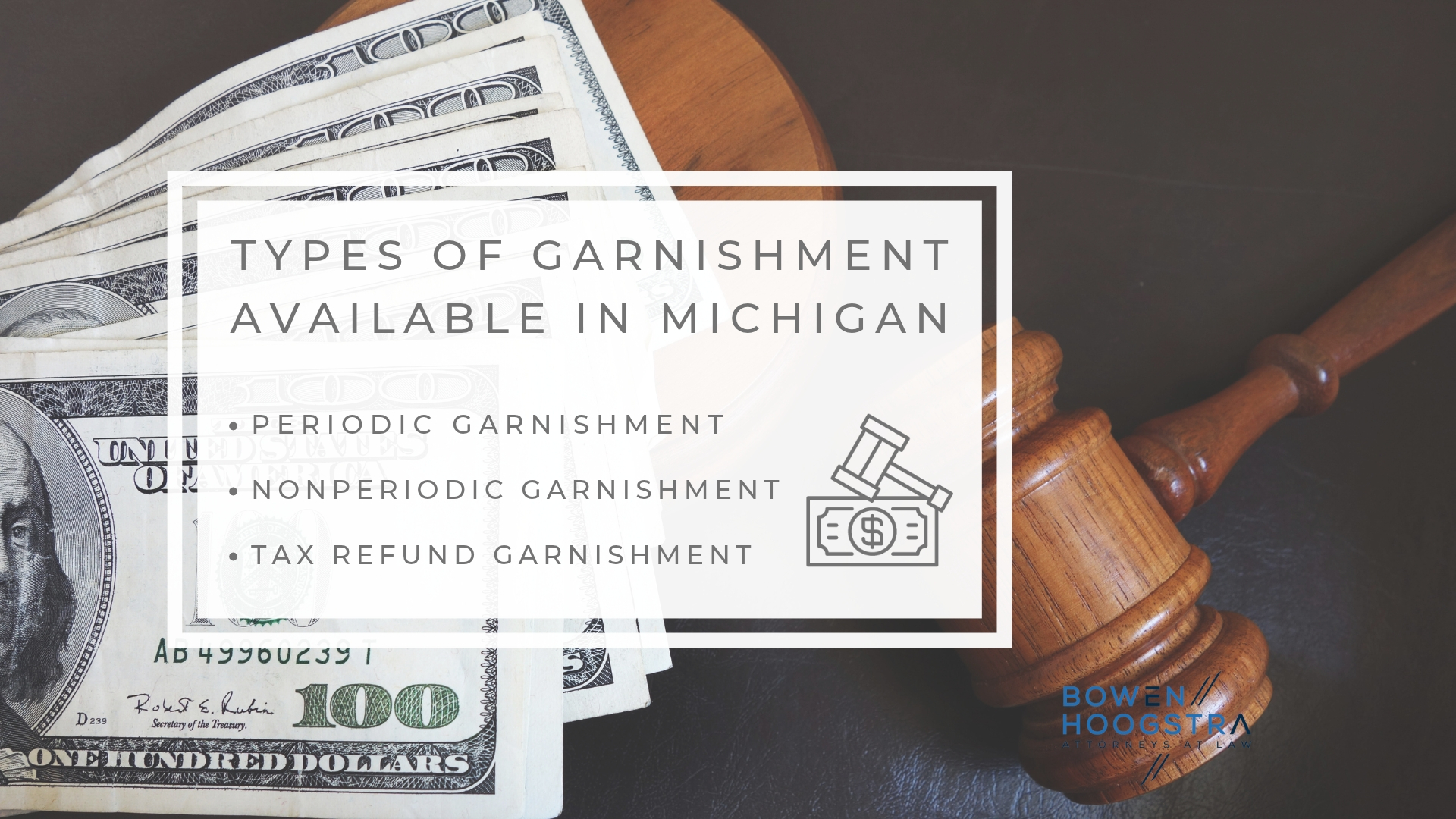
Michigan provides different garnishment procedures depending on where the money of the debtor is held and how often it becomes available.
- Periodic Garnishment
Periodic garnishment applies to money a debtor receives regularly, including wages, salaries, commissions, bonuses, and rent payments. If you know where the debtor works, you can request a periodic writ that directs the employer to withhold the legally permitted portion of future paychecks. Periodic garnishment remains effective until the unpaid judgment, interest, and allowable costs are satisfied or the writ otherwise stops being effective.
- Nonperiodic Garnishment
Nonperiodic garnishment targets money or property a third party holds at a particular time. For example, if the debtor has nonexempt funds available in a checking or savings account, the bank might have to withhold them. Unlike wage garnishment, a nonperiodic writ is a one-time collection based on what the bank holds when the writ is served, meaning a deposit made later is not automatically covered, and you might need another writ to pursue that money.
- Tax Refund Garnishment
Michigan allows garnishment of state income tax refunds or credits. If the debtor qualifies for an income tax refund, eligible funds can be intercepted and applied toward the unpaid judgment. However, the state might first apply the refund to outstanding taxes and other debts that take priority. A tax refund garnishment is a one-time process, not an automatic claim on every future refund. It might be worthwhile when the debtor has limited wages or bank funds.
Before filing a writ of garnishment in Michigan, review lawful information about the payment sources. If necessary, you can use court procedures to request information about the assets of the debtor. A local Muskegon attorney can guide you through the legal process and help you determine the right garnishment approach for your case.
How Creditors Obtain and Enforce a Writ of Garnishment
Creditors must wait 21 days after a final judgment is entered before starting enforcement, although certain motions or court orders might affect that timing. After the waiting period, you file a verified request with the court that entered the judgment, identifying the garnishee and stating the outstanding judgment, accrued interest, and costs. Once the court issues the writ, you arrange proper service on the garnishee, along with the required copies, disclosure form, and applicable fee, and file proof of service.
Michigan generally requires service within 182 days of issuance. The garnishee ordinarily must send the debtor a copy within seven days and file a disclosure within 14 days, confirming whether it holds or owes eligible funds. An employer then withholds the appropriate amounts from applicable pay periods, while a bank withholds eligible funds available when served. Withheld money cannot be sent to the creditor until 28 days after service on the garnishee, and an objection can further delay payment.
Legal Limitations and Common Garnishment Disputes
A garnishment does not allow you to take everything the debtor earns or owns. Garnishment for ordinary debts is limited to the lesser of 25% of disposable earnings or the amount by which weekly disposable earnings exceed 30 times the federal minimum hourly wage. Disposable earnings are the amount remaining after legally required deductions. Michigan garnishment procedures recognize priority rules for certain support orders and tax levies. Federal and Michigan protections might exempt funds, such as Social Security benefits, Supplemental Security Income, veterans benefits, and certain other protected payments.
Furthermore, debtors can challenge garnishments on specific legal grounds. An objection might claim that the funds are exempt, the judgment has been paid, the amount claimed is inaccurate, or the writ was improperly issued or served. The garnishee must provide notice of the writ, and the debtor has 14 days after receiving it to file an objection. For example, if a bank freezes money that includes protected Social Security benefits, the debtor might object and provide evidence showing the source of those funds. A timely objection can prevent the release of withheld money while the Muskegon court decides the dispute.
Recovering Unpaid Judgments Through Legal Garnishment
If you have a court judgment but have not received payment, Bowen Hoogstra Law can help you evaluate your legal options to pursue the money you’re legally entitled to collect. Our seasoned Muskegon lawyers can review the judgment, identify potential sources of recovery, prepare and pursue appropriate garnishment proceedings, and address objections or other collection disputes. We can explain the procedural requirements and costs so you can make informed decisions before taking any action. Contact us today at (231) 726-4484 or here to discuss your case.